
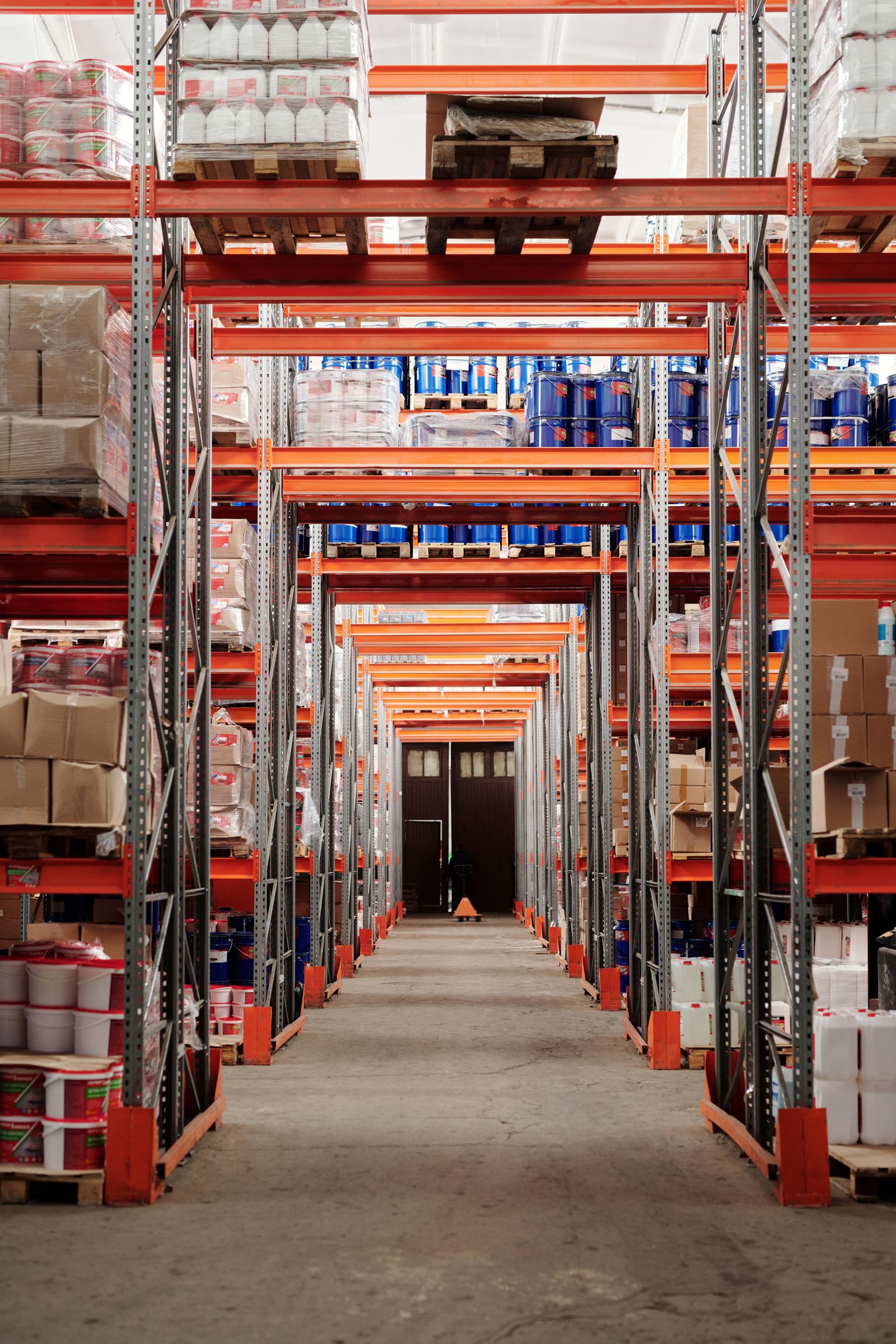

Shipping commercial samples overseas from Canada is how many businesses start exporting: a pallet of flooring for a distributor in Germany, a crate of machine parts for a buyer in Kenya, a few cartons of packaging for a factory in Vietnam. When samples are too bulky or heavy for a courier, sea freight in a shared container (LCL groupage) is the usual alternative. A1 Freight Forwarding Inc. accepts commercial shipments with a total customs value up to CAD 50,000. This article explains the paperwork on the Canadian side, when an export declaration is needed, and what the destination usually asks of the receiver.
When sea freight makes sense for samples
Sea LCL fits samples that are bulky or heavy, have no fixed delivery deadline, and can be collected by the receiver at the destination warehouse. Building materials, machinery parts, packaging, textiles in bulk and display units are typical. Freight is charged by volume or weight, whichever is greater, with a minimum per shipment. A1 Freight Forwarding Inc. offers sea LCL only, from warehouses in Toronto, Montreal and Vancouver: no courier, no air freight and no full containers.
1. The commercial invoice
Every commercial shipment travels with a commercial invoice; customs at both ends use it to identify the goods and their value. You can use our fillable commercial invoice form. It should show:
- the shipper in Canada and the receiver abroad, with full addresses, phone numbers and email;
- a precise description of each item, its quantity and unit value;
- the HS code (Harmonized System classification) of each item; several destinations need it on the bill of lading;
- the country of origin of the goods;
- the total value and currency;
- a note that the goods are samples, and whether they are paid for.
Free samples still have a customs value. Write the real value and a note such as "samples, no charge" rather than a symbolic amount: the value on the invoice is also what decides whether Canada needs an export declaration.
2. Canadian export reporting: under or over CAD 2,000
Canada requires many exports to be reported to the Canada Border Services Agency (CBSA) through the Canadian Export Reporting System (CERS). The CBSA also lists cases where no declaration is needed. One of them, code NDR 2, covers non-restricted commercial goods valued up to CAD 50,000 (we file the export declaration where one is required). For those shipments we simply give the carrier the NDR 2 code.
- CAD 2,000 or more. An export declaration is required. A1 Freight Forwarding Inc. files it in CERS for you, for the fee shown in your quotation, after the cargo is at the warehouse and paid. We will ask for your business number and a written authority to file on your behalf.
- Restricted goods. Goods that need an export permit or licence, such as items on Canada's Export Control List, must be reported with the permit whatever their value.
- The CBSA can still ask. A border services officer may require a report even for goods that are normally exempt.
- Samples that will come back. The CBSA has separate codes for goods exported temporarily, for example under an A.T.A. Carnet. If your samples will return to Canada, tell us before booking.
3. What the destination asks of the receiver
For commercial cargo, the receiver is the importer, and many countries require the importer to be registered. The carrier's conditions list these numbers for many destinations, and the quote calculator shows them when you choose a city. Some examples from the carrier's conditions:
- China: commercial invoice and packing list; the consignee's USCC or tax ID number and the shipper's business number; alcohol and tobacco not accepted.
- India: freight prepaid only; the importer's GSTIN, IEC (Importer Exporter Code) and email, with the IEC on the house bill of lading.
- Vietnam: the consignee's tax ID and the HS code on the bill of lading.
- Pakistan: commercial invoice and packing list; the consignee's national tax number on the bill of lading, and the HS code with gross and net weight.
- Kenya: commercial invoice; a Certificate of Conformity for the Kenya Bureau of Standards; and a 15-character ACD number.
- Bangladesh: the consignee's Business Identification Number (BIN); maximum 3,000 kg per package.
- Israel: the bill of lading must show the exporter number, the importer's VAT or registration number and the HS code.
- Saudi Arabia: certificate of origin; cargo palletized or unitized, every package labelled, with the country of origin on all cargo; maximum 2,000 kg per piece.
- United Arab Emirates: a 6-digit HS code for clearance in Dubai.
- Egypt: commercial invoice; Egyptian labelling and packing regulations; ACID filing.
- Europe, Japan, Turkey, Brazil: commercial invoice required.
Duty and taxes on samples are decided by the destination country. Some countries give relief for samples of negligible value or samples marked as unfit for sale; others charge full duty. Ask your buyer to check with their customs or customs broker before you ship, so the samples do not wait at the terminal.
4. Packing samples for LCL
- Every shipment must be crated or on a heat-treated (ISPM 15) wooden pallet. If your cargo arrives unpalletized at the Toronto, Montreal or Vancouver warehouse, we palletize it there for USD 95 per pallet, added to the invoice after measuring. A courier can pick up your boxes at your door, or your pallets at your business (price in the calculator).
- Label each piece as instructed, with the booking number on every piece, and the country of origin where the destination requires it.
- The warehouse measures and weighs the cargo on arrival; the invoice follows its figures, up or down.
Our article on how to pack for ocean shipping covers pallets and crates in detail; the same rules apply to commercial cargo.
5. Samples we cannot ship
Some product samples cannot travel with A1 Freight Forwarding Inc. at all: dangerous goods of any kind (aerosols, perfumes and other flammable liquids, paints, adhesives, compressed gases, loose batteries), food, medication, plants and seeds, animals, weapons, vehicles, and cash or valuables. If your sample is a machine with a battery or a fuel system, ask before you book.
Step by step
- Confirm with the buyer that they can import the samples and have the registration numbers the carrier lists.
- Get a price with the quote calculator: choose commercial cargo, the destination, and the size and weight of each piece.
- Prepare the commercial invoice and the signed packing list; for CAD 2,000 or more, give us the details for the export declaration.
- Pay the quoted price, then receive the labels and the warehouse address.
- Deliver the cargo to the warehouse with the booking number on every piece.
- After measuring, pay the invoice (the difference, destination charges and palletizing if done).
- The receiver clears the samples at the destination and collects them.
Rates by country for cartons and pallets, with the carrier's conditions: commercial cargo shipping from Canada.
Sources
- Canada Border Services Agency, Memorandum D20-1-1: Exporter Reporting.
- Canada Border Services Agency, Exporters' guide to reporting.
- Carrier's export conditions by country, as shown in the A1 Freight Forwarding Inc. quote calculator.
- A1 Freight Forwarding Inc., Terms of Service, sections 1.2, 2.4, 3.3 and 3.4.
Tell us where your cargo needs to go.
Share the origin, destination and shipment details. We will review the route and reply by email.