

How LCL Sea Freight Pricing Works: Cubic Feet, CBM, Minimums and the Final Invoice
Why an LCL ocean quote is priced by volume or weight, what the minimum charge means, what destination charges are, and why the warehouse measurement can change your final invoice.
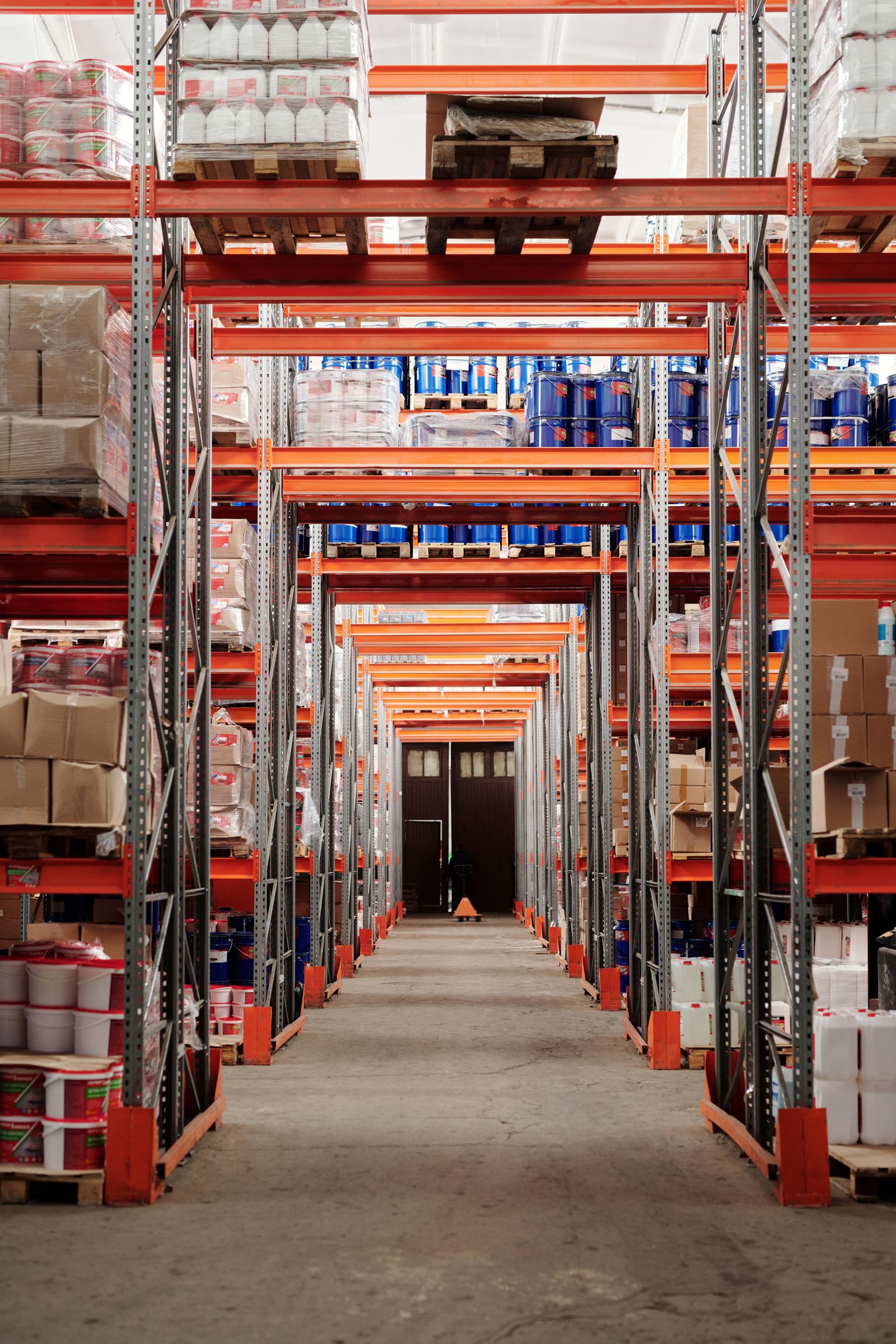
LCL sea freight pricing confuses many people the first time they ship. You are not paying for a container, a number of boxes or the distance alone. You are paying for the space your cargo takes in a shared container, measured in cubic feet or cubic metres, with a few rules on top: weight, a minimum charge, fixed fees per shipment and the charges at the destination terminal. This article explains each part, using the rules of A1's own calculator, so you can read your quote with confidence and avoid surprises on the final invoice.
1. You pay for volume: cubic feet and cubic metres
LCL (less than container load) means your boxes, crates or pallets travel in a container together with other shippers' cargo. The carrier sells space, so the starting point of every price is the volume of your packed cargo.
Volume is measured on the outside of each piece: length × width × height. Two units are used:
- Cubic feet (cu ft). Measure in inches, multiply the three sides and divide by 1,728. A medium moving box of 18 × 18 × 16 inches is 3.0 cu ft.
- Cubic metres (CBM). Measure in centimetres, multiply and divide by 1,000,000. One CBM equals 35.31 cu ft.
A1 shows its rate in US dollars per cubic foot, because most Canadians measure their boxes in inches. The calculator converts automatically if you enter centimetres.
A practical example: a pallet with a footprint of 48 × 40 inches, stacked to 60 inches high including the pallet itself, measures 48 × 40 × 60 / 1,728 = 66.7 cu ft, or about 1.89 CBM. Every centimetre of height counts, so a pallet built neatly to an even top is cheaper than one with a single box sticking up.
2. Weight or measure, whichever is greater
A container can be full by volume or by weight. That is why ocean carriers use the "weight or measure" rule: the freight is calculated on the volume or on a weight equivalent, whichever is greater.
On most routes in the current tariff, 1,000 kg counts as 1 CBM. If you ship 1 CBM of clothes weighing 200 kg, you pay for 1 CBM. If you ship 1 CBM of books weighing 1,300 kg, you pay as if it were 1.3 CBM. A few routes use a different ratio (for example 500 kg or 333 kg per CBM), and the calculator applies the ratio of your route automatically. For the United Arab Emirates the tariff adds a ratio of 450 kg per CBM when a shipment is heavier than three tonnes.
For typical household goods the volume decides the price. Weight matters for books, tools, tiles, machine parts and other dense cargo.
3. The minimum charge
Every route has a minimum. On most routes the minimum ocean freight equals 1 CBM (35.3 cu ft): if you send 15 cu ft, the ocean freight is charged as 35.3 cu ft. Some routes have a higher minimum; the tariff notes, for example, a minimum of 2 CBM for Hanoi and 3 CBM for East London in South Africa.
The calculator shows this openly: the line "Charged volume" says "(minimum)" when the minimum applies. If you are below the minimum, adding a few more boxes may cost little or nothing extra on the ocean freight.
4. Fixed fees per shipment
Besides the ocean freight, every A1 quote has fixed lines per shipment: a processing fee and surcharges, shown separately in the calculator. They are the same whether you send five boxes or a full pallet. This is why the price per cubic foot of a very small shipment is higher than that of a larger one, and why it often pays to combine everything into one shipment instead of sending two small ones.
If you start in Calgary, Edmonton, Regina, Saskatoon or Winnipeg, the quote also includes road transport to the port warehouse. The calculator compares the route east through Montreal and west through Vancouver and shows the cheaper one.
5. Destination charges, and why A1 collects them in Canada
The ocean price covers the cargo from the Canadian receiving warehouse to the destination warehouse (container freight station, CFS). When the container arrives, the destination agent unloads it, separates your cargo from the rest and releases it against documents. These services have their own fees, called destination charges. They differ by port and by shipment, and the carrier sets them.
Many forwarders leave these charges for the receiver to pay on arrival, often without knowing the amount in advance. A1 works differently: once the carrier has accepted your shipment and confirmed its destination charges, A1 adds them to your price, and you pay freight and destination charges together, here in Canada, before the booking is confirmed. The receiver is not asked for the carrier's destination charges, and you know the full carrier price before you pay.
What is not included: customs duties, import taxes and customs clearance at destination, and any charge at destination the carrier did not confirm. These are paid by the receiver, under the rules of the destination country. Some countries also have no free storage time (the tariff says so for the Philippines and for Istanbul), so the receiver should be ready to clear the cargo quickly.
6. Why the final invoice can differ from the quote
The online price uses the sizes and weights you enter. The final price uses what the receiving warehouse measures when your cargo arrives. If the two match, nothing changes. If they do not, the freight is recalculated on the measured size and weight. Common reasons:
- Pallets add size. A pallet adds its own height (roughly 13 to 15 cm) and may be wider than the boxes on it. Enter the outer size of the finished pallet, not of the boxes.
- Bulging or overstuffed cartons. A box that was 16 inches high empty can be 18 inches when it is overfilled.
- Estimated instead of measured. "About 2 by 2 feet" is not a measurement. Use a tape measure on the packed piece.
Under A1's terms, if the cargo measures more than declared, the difference is invoiced and must be paid before the cargo is released for loading. If it measures less, the freight is recalculated on the smaller size.
7. Currency and payment
Ocean tariffs are published in US dollars, so quotes are shown in USD. The invoice states the total due in Canadian dollars, converted on the invoice day. Smaller amounts can be paid by card through a secure payment link; larger amounts by Interac e-Transfer, as described in the invoice.
8. How to keep the price down
- Measure every packed piece with a tape measure and round up to the next inch or centimetre.
- Use strong boxes of a few standard sizes that stack into a square block on a pallet with no overhang.
- Fill boxes completely: empty space is paid for like any other space.
- Ship everything in one booking so the fixed fees apply once.
- Compare the three gateways in the calculator; the cheapest one depends on the destination.
- Deliver the cargo by the date in your delivery instructions to avoid storage and cancellation fees.
Every rule above is built into A1's calculator. Enter your route, cargo type and the size and weight of each piece on the quote page to see the rate per cubic foot, the charged volume and the total. For a step-by-step guide to the whole process, read how to ship personal effects from Canada overseas.
Sources
- A1 Freight Forwarding, Terms of Service, sections 2.3 to 2.5 (destination charges, measured weight and dimensions, charges paid by the consignee).
- A1 Freight Forwarding, instant quote calculator (rate per cubic foot, weight-to-volume ratio and minimum of each route, from the carrier's current export tariff).
- Government of Canada, Justice Laws, Weights and Measures Act, Schedule II (Canadian units of measurement: yard, foot, inch and cubic foot).
Tell us where your cargo needs to go.
Share the origin, destination and shipment details. We will review the route and reply by email.