

How to Pack Household Goods for Ocean Shipping: Pallets, Crates and ISPM 15
A practical guide to packing personal effects for LCL ocean freight from Canada, from strong boxes to ISPM 15 heat-treated pallets and wooden crates.
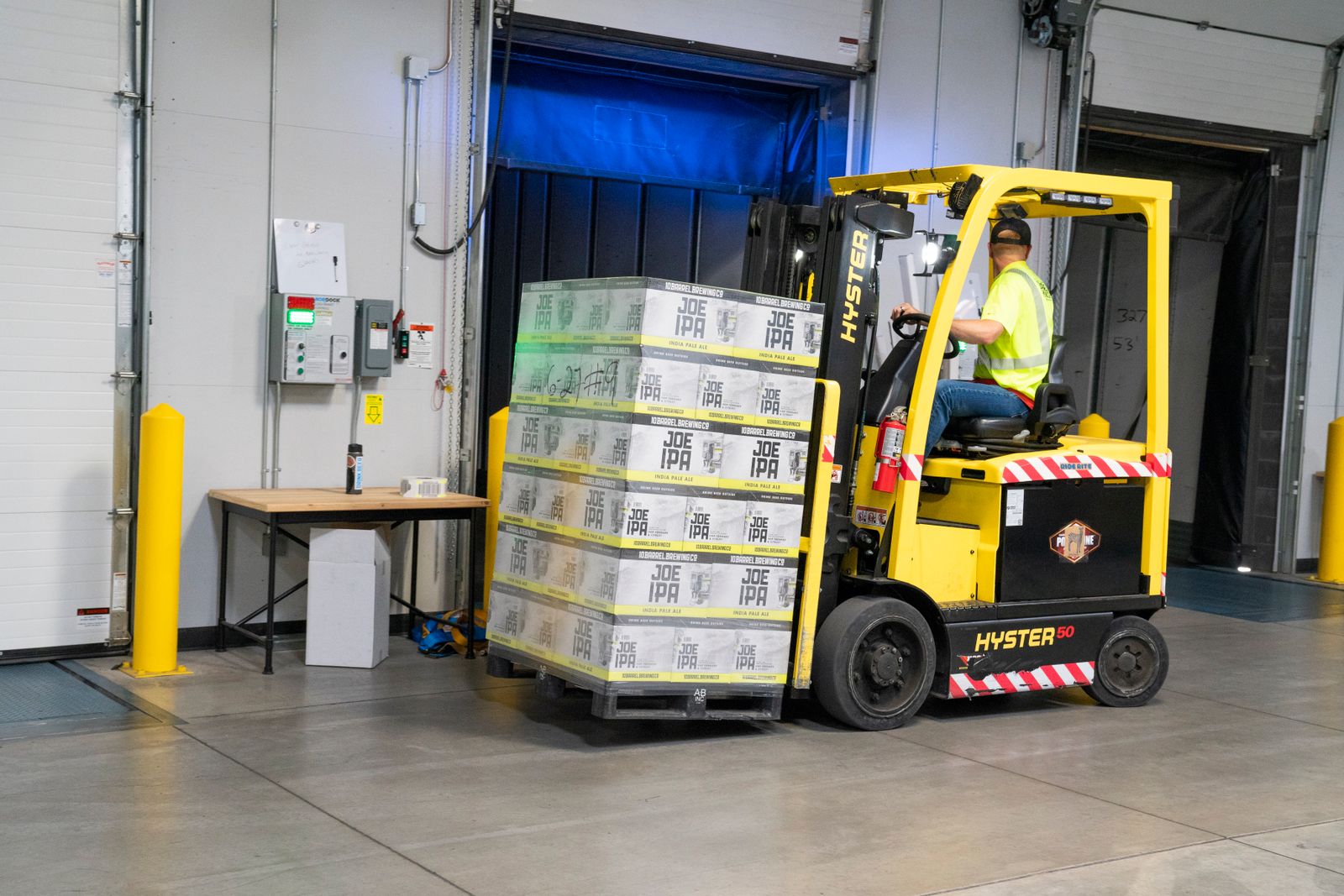
Packing household goods for ocean shipping is different from packing for a move across town. In a shared LCL container your cargo is lifted by forklift, stacked next to other shippers' freight, loaded, unloaded at the destination warehouse and handled again before the receiver collects it. That is why A1 Freight Forwarding Inc. accepts every shipment only crated or secured on heat-treated wooden pallets that meet ISPM 15, the international standard for wood packaging. This guide explains what that means and how to prepare your cargo so it arrives intact and is measured correctly.
1. What ISPM 15 is and why it matters
ISPM 15 is an international phytosanitary standard. Its purpose is to stop insects and plant diseases from travelling in wooden pallets, crates and dunnage. Most countries enforce it, and the carrier lists "Subject to ISPM 15 Packing Regulations" for nearly every destination A1 Freight Forwarding Inc. serves.
The key points, as explained by the Canadian Food Inspection Agency (CFIA):
- The wood must be heat treated to at least 56 °C for at least 30 continuous minutes through the entire profile of the wood, including its core.
- Compliant wood packaging carries a certification mark: the IPPC symbol, a country code, a facility code and the treatment code (HT for heat treatment).
- In Canada, only facilities registered by the CFIA under its heat-treated wood program may apply the mark.
- Buying "heat treated" lumber from a hardware store is not enough. The CFIA says plainly that it does not meet ISPM 15.
- Packaging made wholly of processed wood, such as plywood, particle board, oriented strand board (OSB) or veneer, is exempt from the standard.
Wood that does not comply can be refused at the border. Canada, for example, orders imported shipments with non-compliant wood packaging removed from the country, at the importer's cost; other countries apply similar measures. Using a marked pallet costs very little compared with that risk.
2. Three ways to prepare your shipment
The carrier's conditions say that cargo containing household goods or personal effects must be professionally packed. A1 Freight Forwarding Inc. does not pack cargo or pick it up: you, a packing company or a mover you hire prepares the pieces and brings them to the receiving warehouse. The points below show what a well-prepared shipment looks like, whoever does the packing.
Option A: boxes on an ISPM 15 pallet
This is the most common choice for personal effects. Buy a new or used pallet that carries the ISPM 15 stamp from a pallet supplier; the CFIA publishes lists of registered facilities. A standard North American pallet has a footprint of 48 × 40 inches.
- Use boxes of a few standard sizes so they stack in even layers.
- Put the heaviest boxes at the bottom and keep the top flat.
- Do not let boxes hang over the edge of the pallet: overhanging boxes get crushed and add to the measured size.
- Wrap the whole load tightly in stretch film several times, including around the pallet deck, and add plastic straps if you can.
- Cardboard corner boards and a sheet of cardboard on top help protect the load.
Option B: a wooden crate
A crate suits furniture, mirrors, framed pictures, a sewing machine or anything fragile. Build it from ISPM 15 marked lumber, or from plywood or OSB panels, which are exempt as processed wood. Put the crate on skids or runners so a forklift can lift it, pad the contents with blankets or foam, and screw the lid on rather than nailing it, so it can be opened for an inspection.
Option C: palletizing arranged with the warehouse
Cargo must be crated or palletized on heat-treated wood (ISPM 15) when it is delivered to the warehouse. A1 Freight Forwarding Inc. does not pack cargo; you may ask the receiving warehouse to palletize it for a fee, arranged and paid directly with them. Remember that the finished pallet is what will be measured and charged.
3. Packing the boxes themselves
- Use new, strong double-wall cartons. Old grocery boxes soften in humid sea air.
- Fill each box completely so it does not collapse under the weight of the layer above. Fill gaps with towels, clothing or packing paper.
- Pack heavy items such as books in small boxes and light items in large ones. A box that one person can lift comfortably is easier to handle and less likely to be dropped.
- Tape all seams on the top and bottom, not only the centre line.
- Wrap dishes and glass one by one and stand plates on edge.
- Line boxes with plastic bags for textiles and books; condensation can form in a container.
- Number every box and write the same numbers on your packing list, with a clear description of the contents.
4. Labels and markings
After payment you receive shipping labels with the booking number. Every piece you deliver, each pallet or crate, must carry the booking number.
Some destinations have extra rules in the carrier's conditions:
- Philippines: cargo must have proper markings or labels showing the country of origin, and the shipper's and consignee's full details.
- Saudi Arabia: cargo must be palletized or unitized, every package labelled, and the country of origin shown on all cargo; the maximum weight per piece is 2,000 kg.
- Sri Lanka: cargo weight must not exceed 3,000 kg per package.
- Australia: a fumigation surcharge applies during the brown marmorated stink bug (BMSB) season, from 1 September to 30 April.
5. Measure after packing
Ocean freight is charged on the outer size of each finished piece, or on its weight when that is greater. Measure the pallet or crate after it is built and wrapped, at its widest and highest points, including the pallet itself, which adds roughly 13 to 15 cm of height. Weigh it if you can, or add up the box weights plus the pallet.
The receiving warehouse measures and weighs every shipment on arrival, and the freight is recalculated on its figures. The final invoice follows that measurement, up or down, and a difference in your favour is credited. The calculator prices the volume and weight you enter, so measure the packed pieces, not the empty boxes. Read how LCL sea freight pricing works for the details.
Very large or heavy pieces are priced personally. In the calculator this applies to a piece larger than 200 × 225 cm (78 × 88 in) in length and width, higher than 225 cm (88 in) or heavier than 3,000 kg, and to shipments over 4,450 kg in total. Some destinations have lower limits: for Saudi Arabia the maximum is 2,000 kg per piece.
6. What not to pack
A1 Freight Forwarding Inc. does not accept vehicles, food, plants, seeds, animals, medication and supplements, weapons, cash and valuables, or dangerous goods of any kind: aerosols, paint, fuel, propane, flammable liquids, cleaning chemicals and loose batteries. Equipment with an engine or a fuel tank, such as a lawn mower or a generator, is best left behind. If you are not sure about an item, ask before you pack it.
Packing checklist
- Pallet with a visible ISPM 15 mark, or a crate of marked lumber or plywood/OSB.
- Strong, full, taped boxes, numbered and listed on the packing list.
- Load wrapped and strapped, no overhang, flat top.
- Booking number on every piece; country-of-origin markings where the destination requires them.
- Final size and weight measured after packing and entered on the quote page.
Sources
- Canadian Food Inspection Agency, Canadian Heat Treated Wood Products Certification Program (HT program), with links to the lists of registered facilities.
- Canadian Food Inspection Agency, D-13-01: Canadian Heat-Treated Wood Products Certification Program (treatment standard and certification mark).
- Canadian Food Inspection Agency, Wood packaging questions and answers (processed wood exemption, non-compliant shipments).
- International Plant Protection Convention, ISPM 15: Regulation of wood packaging material in international trade.
- A1 Freight Forwarding Inc., Terms of Service (packing, labelling and goods not accepted) and the carrier's country conditions shown in the quote calculator.
Tell us where your cargo needs to go.
Share the origin, destination and shipment details. We will review the route and reply by email.